
China Top 10 Sanitary Napkin Making Machine Suppliers

Choosing reliable equipment partners requires more than comparing advertised production speeds. This guide examines China’s top 10 sanitary napkin making machine suppliers through practical industry criteria. The evaluation considers manufacturing experience, engineering capability, product consistency, customization, after-sales support, and international service capacity.

A dependable Sanitary Napkin Making Machine should support stable material feeding, accurate cutting, controlled embossing, and secure sealing. It should also maintain hygiene standards across the production line. Details matter. A responsive PLC system, accessible spare parts, and clear operator training can prevent costly downtime. Factory visits, video inspections, and verified customer references provide useful evidence before purchasing. These steps may reveal more than polished catalogs.

Not every supplier fits every factory.

Some companies focus on high-speed lines, while others serve small and medium-sized manufacturers. Differences in product dimensions, absorbent core structures, packaging formats, and target markets can change the best choice. Buyers should compare actual output, energy use, installation conditions, and maintenance requirements. Claimed capacity may also depend on raw material quality and operator experience. That point is easy to overlook.

This overview aims to provide a balanced starting point for responsible sourcing. It does not treat rankings as permanent facts. Supplier performance can change with new engineers, updated machinery, or weaker service after installation. Therefore, readers should verify certifications, test samples, inspect key components, and request detailed quotations. Practical evidence remains essential when investing in sanitary product manufacturing equipment.
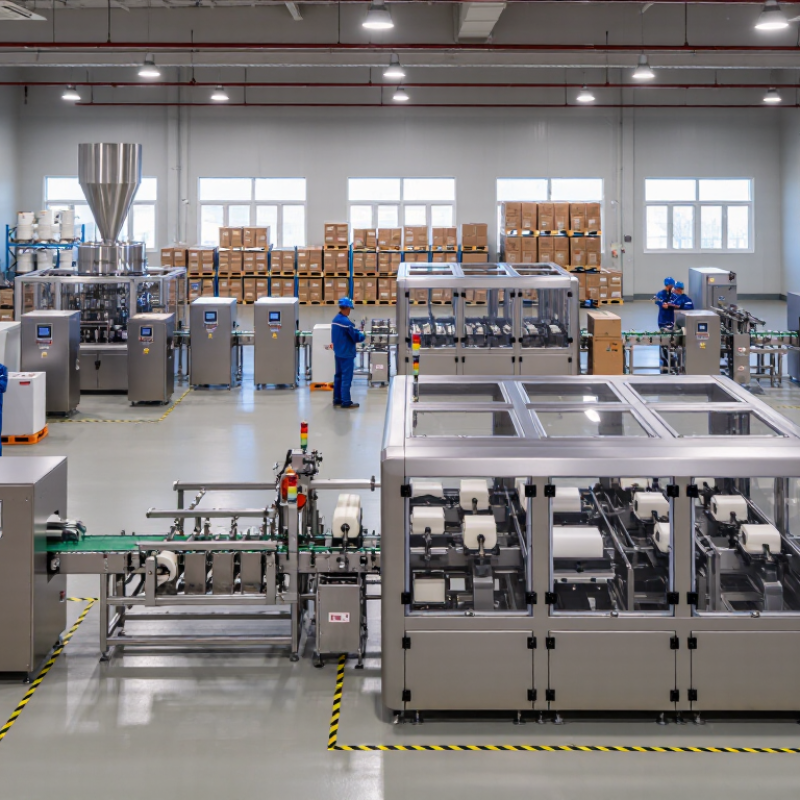
China Top 10 Sanitary Napkin Making Machine Suppliers

What Defines a Leading Sanitary Napkin Machine Supplier in China

What Defines a Leading Sanitary Napkin Machine Supplier in China

A leading sanitary napkin machine supplier is defined by verified performance, not catalogue speed. Grand View Research valued the global sanitary napkin market at USD 23.63 billion in 2023. It also expects steady growth through 2030. This growth increases pressure on hygiene, uptime, and production costs. A credible supplier should provide factory acceptance records, reject rates, energy data, and line-speed results. Numbers matter. Product trials should match the buyer’s formats, including wings, multiple absorbent cores, and breathable backsheets.

Engineering support reveals the real difference. A dependable supplier explains tension control, adhesive application, servo accuracy, and dust management clearly. It should also provide traceable quality checks and documented operator training. ISO 9001 certification can support process consistency, but certification alone proves little. Buyer audits remain essential. WHO and UNICEF’s Joint Monitoring Programme highlights that menstrual health depends on reliable access to suitable products. Therefore, machine stability affects more than output. It affects user confidence. A faster line can still be the wrong investment.

Tips: Request a 72-hour production trial using your materials. Check absorbency consistency, seal strength, noise, waste, and changeover time. Ask for spare-parts availability and remote support terms. No supplier is perfect. A careful buyer should question impressive claims and calculate the cost of small failures.

Key Criteria for Ranking the Top 10 Chinese Suppliers

China Top 10 Sanitary Napkin Making Machine Suppliers

Ranking the top Chinese suppliers requires more than comparing advertised prices. A reliable assessment begins with factory experience, production records, and technical specialization. Suppliers with years of continuous machine deliveries usually understand speed control, absorbent core forming, sealing accuracy, and material waste. However, long operation alone does not prove current capability.

Factory audits provide stronger evidence. Reviewers should inspect assembly areas, electrical wiring, spare-part storage, and completed machines under testing. A live production trial can reveal unstable tension, uneven cutting, or excessive noise. Key ranking points include hourly output, product size flexibility, automation level, energy use, and changeover time. Small details matter.

Quality systems and documentation also deserve close attention. Suppliers should provide clear manuals, inspection records, training plans, and compliant electrical components for the destination market. Responsive after-sales support is essential, especially when remote troubleshooting affects production hours. Ask about spare-part availability and technician response times. Pricing can mislead. A cheaper machine may require frequent adjustments, while a higher initial cost may reduce waste and downtime. Even so, supplier claims should be challenged through references, sample testing, and contract details. No ranking is perfectly objective. Factory capacity, service quality, and delivery performance can change over time. A careful buyer should keep reviewing the evidence.

Profiles of China’s Top 10 Sanitary Napkin Machine Suppliers

China’s top 10 sanitary napkin machine suppliers differ in engineering focus, production scale, and service depth. One supplier specializes in compact lines for regional factories. Another develops high-speed systems with servo-driven cutting and automatic material alignment. A third focuses on flexible machines, allowing quick changes between regular, ultra-thin, and night-use products. These differences matter more than impressive brochures.

Several suppliers combine machine design, electrical control, installation, and operator training. Their profiles often show stainless-steel contact areas, touchscreen monitoring, tension control, and waste collection systems. Some offer online troubleshooting and spare-parts support within fixed service periods. Others rely heavily on local agents, which may slow response times. Ask for factory-test records, energy data, and videos of continuous production. Paper specifications are not enough.

The remaining suppliers generally serve export markets with customized layouts and private-label equipment integration. Their strengths may include modular upgrades, dust-control planning, and careful packaging for overseas transport. Buyers should examine real output, reject rates, changeover time, and maintenance access. A machine rated at high speed may perform differently with thinner absorbent cores or uneven raw materials. That is easy to overlook. Factory visits, reference calls, and sample trials create stronger evidence than sales promises. Even experienced buyers can misjudge training needs, because a complicated control panel may reduce productivity after installation. Supplier profiles should therefore reflect both technical ability and practical accountability.

Machine Types, Production Capacity, and Technical Features

China Top 10 Sanitary Napkin Making Machine Suppliers

China’s top ten sanitary napkin machine suppliers usually offer several equipment types. These include standard pad lines, ultra-thin pad lines, panty liner machines, and winged napkin systems. Some suppliers also build machines for maternity pads and adult care products. Production capacity often ranges from 400 to 1,200 pieces per minute, depending on product size and material structure.

A high number can mislead. Actual output may drop during film changes, quality checks, or frequent size adjustments.

Technical features deserve closer attention than impressive brochures. Servo-driven feeding improves material control and reduces alignment errors. PLC systems support recipe storage, alarm tracking, and faster changeovers. Automatic tension control helps manage nonwoven fabric, absorbent core material, and release paper.

Reliable lines should include metal detection, waste removal, counting systems, and sealed safety guards.
Operators should also check compressed-air consumption, heating stability, spare-part availability, and remote technical support.

In practice, some machines perform well during factory trials but need adjustment after installation. That detail is often overlooked.

Tips:

Request a live production test using your actual materials. Confirm speed at the required absorbency level, not empty-machine speed. Ask for sample waste rates and changeover records. Review electrical standards before shipment. A lower purchase price may create higher maintenance costs later. I would also inspect the control cabinet personally, because neat wiring often reflects better service discipline.

How to Evaluate and Choose the Right Chinese Supplier

China Top 10 Sanitary Napkin Making Machine Suppliers

Choosing a Chinese sanitary napkin machine supplier requires more than comparing catalog prices. Review the supplier’s factory, engineering team, and production records. A polished showroom is not proof. Request a live demonstration using your own absorbent core, nonwoven fabric, and packaging materials. Check speed, rejection rate, noise, and changeover time. Record the results in writing.

Ask for detailed drawings, electrical diagrams, spare-parts lists, and maintenance schedules. Reliable suppliers explain material specifications instead of hiding behind general promises. Inspect contact surfaces, dust-control systems, sealing quality, and cleaning access. Confirm whether critical components are traceable and replaceable. Request recent customer references from similar production environments. Numbers matter.

After-sales support often decides whether a machine earns money or creates delays. Clarify installation, operator training, remote assistance, response times, and warranty exclusions. Ask how many technicians can support your language and time zone. Calculate the total cost, including shipping, commissioning, molds, consumables, upgrades, and downtime. A low quotation may exclude essential items. Do not guess. Put every assumption into the contract. One practical weakness deserves attention: buyers sometimes focus on maximum speed and overlook stable speed during long production runs. A twelve-hour trial may reveal more than a confident sales presentation. Review the supplier’s quality-control records and test procedures before making a decision.

China Top 10 Sanitary Napkin Making Machine Suppliers - How to Evaluate and Choose the Right Chinese Supplier

The following supplier-evaluation matrix uses practical purchasing criteria for sanitary napkin production equipment. The benchmarks are general reference values and should be verified against the machine configuration, product specification, and factory conditions.

No. Evaluation Dimension Recommended Reference Benchmark What to Verify Suggested Weight Common Warning Signs
1 Machine Capacity Select a rated output that matches the target product and operating plan; commonly quoted capacity ranges from approximately 300 to 1,200 pieces per minute depending on configuration. Confirm tested output, product size, raw-material specification, rejection rate, and whether the quoted speed is theoretical or sustained. 15% Only a maximum speed is provided without a production test or acceptance criteria.
2 Product Compatibility The line should support the required napkin format, dimensions, absorbent core structure, wing design, release paper, packaging style, and sealing method. Request approved drawings, sample products, change-part lists, size-change procedures, and a demonstration using the buyer’s materials. 14% The supplier cannot provide samples or treats every product size as a standard configuration.
3 Manufacturing Quality A documented quality-management process should cover incoming materials, machining, assembly, wiring, testing, packing, and final inspection. Check quality procedures, inspection records, equipment calibration, traceability, and relevant management-system certification where applicable. 12% No inspection records, unclear component traceability, or refusal to conduct factory quality checks.
4 Automation and Control System The machine should include a clear control interface, synchronized servo or variable-frequency drives where required, alarm records, recipe storage, and safety interlocks. Review the electrical diagram, control-system functions, language options, fault history, remote-support method, and software backup policy. 10% Unprotected control cabinets, undocumented software, or no backup for machine parameters.
5 Safety and Regulatory Compliance The line should include guards, emergency stops, safe access points, electrical protection, warning labels, and a documented risk assessment suitable for the destination market. Verify the applicable conformity documents, electrical schematics, safety-test records, user manual, and machine-specific declaration where required. 10% Generic certificates that do not identify the machine or missing emergency-stop and guarding details.
6 Energy and Utility Consumption Compare installed electrical power, compressed-air demand, operating speed, heating requirements, and material waste rather than purchase price alone. Request a utility list, connected-load calculation, air-consumption data, operating assumptions, and measured waste percentage from a test run. 9% Consumption figures are stated without operating conditions or exclude auxiliary equipment.
7 After-Sales Service A dependable supplier should provide installation guidance, commissioning, operator training, troubleshooting support, and a defined response process. Confirm service scope, support hours, communication channels, engineer availability, response targets, and training duration in the contract. 10% Only informal messaging support is offered and no commissioning or training plan is provided.
8 Spare Parts and Maintainability Wear parts should be clearly identified, reasonably accessible, and available with part numbers, recommended stock levels, and replacement instructions. Review the spare-parts catalogue, lead times, recommended first-year stock, lubrication schedule, and preventive-maintenance checklist. 8% Parts have no identification numbers or the supplier cannot provide replacement lead times.
9 Delivery and Project Management The quotation should define manufacturing milestones, factory acceptance testing, packing, shipping responsibilities, installation conditions, and final acceptance. Ask for a project schedule, payment milestones, inspection points, packaging specification, and a written delay-management procedure. 6% The delivery date is stated without milestones, acceptance testing, or shipping responsibility.
10 Total Cost of Ownership Evaluate the complete cost over the expected service period, including machine price, tooling, installation, utilities, labor, maintenance, spare parts, packaging, freight, and downtime. Compare at least three itemized quotations using identical output, product, delivery, warranty, and service assumptions. 6% A low initial price excludes tooling, installation, training, freight, or essential auxiliary equipment.
Recommended selection method: Score each supplier from 1 to 5 for every dimension, multiply the score by the suggested weight, and shortlist suppliers that pass the product test, safety review, factory acceptance test, and contract-based performance requirements.
Back to top