
Buying home equipment at wholesale prices sounds straightforward until delivery fees, minimum orders, and warranty exclusions enter the picture. A $450 washing machine can become a $620 purchase after freight, installation, and removal charges. The advertised discount tells only part of the story. Details matter. A worthwhile deal combines dependable performance, clear seller terms, and a total cost that fits your budget.
Designer and home furnishings expert William Morris offered a useful buying principle: “Have nothing in your houses that you do not know to be useful, or believe to be beautiful.” His advice remains relevant when comparing appliances, kitchen fixtures, and other home equipment. A stainless steel finish cannot compensate for unavailable replacement parts or an unsuitable electrical connection. Before paying, check the exact model number, dimensions, voltage requirements, and written warranty. Ask whether the manufacturer honors coverage when purchases come through that supplier. For bulk purchases, request a sample or inspect one unit whenever practical. Keep the paperwork.
Wholesale pricing also deserves a little skepticism. Some offers require business credentials, while others depend on buying several units or accepting discontinued stock. A scratched casing might be acceptable; an unclear service history deserves closer examination. Even a careful checklist can miss something, especially when product specifications are incomplete. That uncertainty is worth acknowledging. This guide explains how to compare suppliers, verify quality, and calculate real savings before committing to a purchase. The goal is equipment that earns its place in your home without stretching your budget unnecessarily.
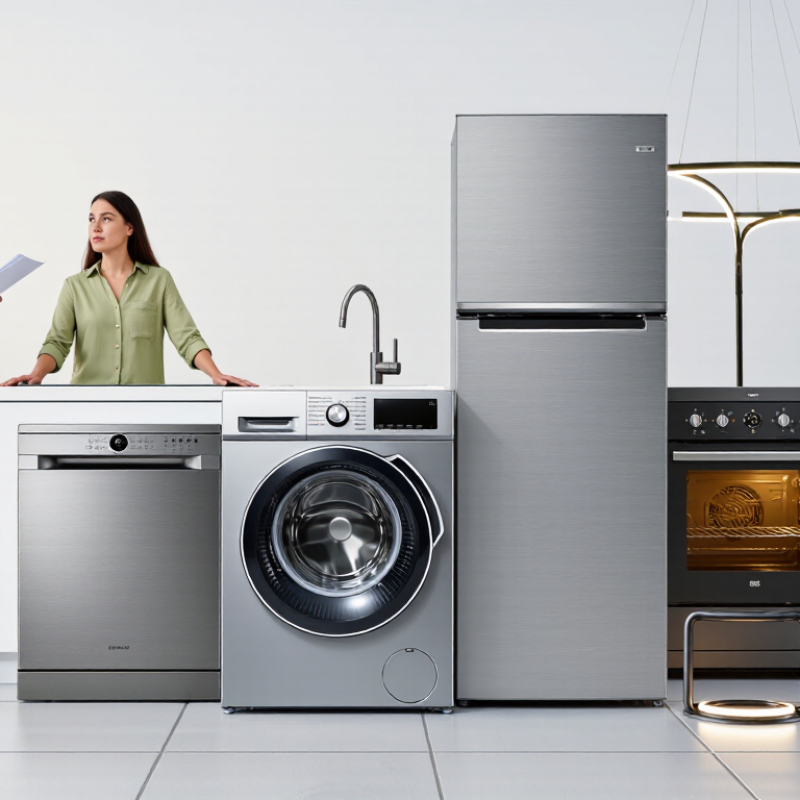
Define the job before comparing wholesale prices. Measure available space, doorways, and utility connections. Write down capacity, weekly usage, and acceptable noise levels for each item. Be specific. A washing machine for two adults needs different capacity than one serving six people. For heating and cooling equipment, prioritize efficiency alongside purchase price. The U.S. Energy Information Administration’s 2020 Residential Energy Consumption Survey attributes 52% of household energy consumption to these uses.
Turn “good quality” into requirements you can verify. Request model-specific test reports, written warranty terms, replacement-part availability, and installation instructions. For appliances, compare annual energy consumption under the same testing standard. Check the details. A stainless-steel exterior alone tells you little about internal components or repairability. Ask wholesale suppliers whether quoted units are new, refurbished, or cosmetically damaged. Request a sample when practical, especially before ordering several identical units. These checks take time, and documentation cannot guarantee durability. Still, missing specifications make a low quote harder to evaluate.
Tips: Create a purchasing sheet with three columns: essential features, acceptable compromises, and rejection criteria. Record delivery, installation, and inspection costs beside each quote. You might accept a scratched side panel that faces a wall. A missing safety document should stop the purchase. Reconsider oversized equipment, too; extra capacity can become an expensive feature you rarely use.
Wholesale pricing usually depends on order size, product specifications, and the supplier’s distribution terms. Discounts are not guaranteed. Ask for price tiers at 12, 24, and 48 units, clearly treating these as quotation requests. A minimum order quantity may apply per model, finish, or shipment. Check the details. Twelve faucets in one finish may qualify; twelve mixed finishes might not. Compare landed costs, including freight, taxes, inspection, and potential damage. A cheaper unit can become expensive when replacement parts require separate international shipping.
Buyer requirements vary by supplier and location. Some wholesalers request business registration, tax documentation, or a resale certificate where applicable. Others accept individual buyers purchasing full cartons. Quality deserves equal attention. The U.S. Energy Information Administration’s 2020 Residential Energy Consumption Survey found that 88% of U.S. households used air conditioning. For equipment serving such widespread needs, purchase price alone provides an incomplete comparison. Request model-specific efficiency ratings, applicable safety certification, warranty terms, and replacement-part availability. Verify certificate numbers through the issuing organization.
Tips: Order one sample before committing to a larger batch, when the supplier permits it. Inspect fittings, switches, packaging, and the exact model label. Photograph defects immediately. One sample proves little. It can expose obvious problems, but it cannot establish consistency across an entire shipment. If sampling is unavailable, negotiate an inspection arrangement and written defect remedies before paying.
Finding reliable wholesale suppliers takes more than comparing prices for refrigerators, washing machines, or kitchen equipment. Start with trade directories, industry associations, and exhibitor lists from established home equipment exhibitions. These sources offer leads, but inclusion does not prove reliability. Check the details. Ask for the supplier’s registered business name, registration number, warehouse address, and a written quotation showing minimum order quantities and payment terms. Compare those details with official business records where available, and investigate mismatched addresses before sending a deposit.
Request a live video walkthrough of the warehouse, including product labels and packaging for your chosen models. A polished showroom photo tells you little about available stock. For electrical equipment, request safety documentation applicable to your destination market. Verify the issuing organization and check that each document covers the exact model offered, rather than accepting a generic certificate for similar products. Ask for references from recent business customers and contact them independently. Useful questions cover delivery delays, damaged units, replacement parts, and how the supplier handled complaints after receiving payment.
Order a sample. Test basic functions, inspect plug compatibility, and check whether the instructions clearly explain installation and maintenance. One successful sample cannot establish consistent quality across an entire shipment. A small trial order costs more per unit, but it can expose packaging weaknesses before you commit to a larger purchase. Compare total landed costs, including freight, applicable duties, inspection fees, and potential storage charges. You may still overlook something; record uncertainties in writing and ask the supplier to clarify warranty exclusions before approving the order.
Wholesale pricing means little if home equipment fails after a few months. Compare material thickness, joint strength, and replacement part availability before considering the discount. For a storage cabinet, check shelf load ratings and whether its doors sit squarely. Request a sample when ordering multiple units. Inspect it closely. Photos can hide thin panels, rough edges, or fittings that loosen with repeated use. Written specifications and independent testing documents offer stronger evidence than vague claims about premium quality.
Calculate the delivered cost per usable item, including freight, taxes, assembly, and any required accessories.
A $240 appliance with $85 shipping costs more than a comparable $300 unit delivered free.
Bulk purchases also require storage space, and damaged units can erase the savings. Buying extra stock feels economical, but that assumption deserves scrutiny when demand is uncertain. A slightly higher price may be reasonable when parts and service are readily available.
Read the warranty for coverage duration, excluded components, labor charges, and who pays return freight. Get clarification in writing when coverage sounds ambiguous. Check return deadlines. Some wholesale sellers accept defective goods but refuse returns simply because an item does not fit.
Keep the packaging until inspection is complete, and photograph damage before installation. A cosmetic scratch might be acceptable; a cracked support bracket warrants a replacement request before use.
Wholesale prices mean little if payment terms, freight charges, and damage claims remain vague.
Ask for an itemized quote covering model numbers, quantities, delivery charges, and warranty coverage. Negotiate the complete cost. For larger orders, request a staged payment schedule rather than automatically accepting full prepayment.
Confirm whether unloading, installation, and replacement shipping cost extra. Get it in writing.
Efficiency specifications deserve the same attention as discounts when buying heating or cooling equipment.
The U.S. Energy Information Administration’s 2020 Residential Energy Consumption Survey attributes 52% of household energy consumption to heating and cooling.
That makes operating costs worth comparing alongside the purchase price. Request documented efficiency ratings, warranty exclusions, and replacement-part availability for each quoted model. A cheaper unit may lose its advantage through higher energy bills or expensive repairs.
Still, efficiency estimates cannot predict your exact savings; climate, installation quality, and usage affect performance.
Inspect before signing.
A clean carton does not guarantee an undamaged appliance, so avoid treating the doorstep inspection as complete verification.