What Is the 2026 Best Surgery Equipment for Global Buyers?

Choosing the best surgery equipment in 2026 requires more than comparing prices or polished product images. Global buyers need evidence, serviceability, training, and measurable clinical value. The World Health Organization estimates that billions of people still lack access to safe, affordable surgical care. That gap makes dependable equipment essential, especially in hospitals facing unreliable electricity, limited biomedical engineers, and crowded operating rooms.

Market forecasts also show continued expansion. Fortune Business Insights projects sustained growth in the global surgical equipment market, driven by minimally invasive procedures, aging populations, and hospital modernization. However, forecasts vary widely between research firms. Buyers should question optimistic numbers. A fast-growing market does not guarantee safe performance.

Dr. Atul Gawande, a leading surgeon and author of The Checklist Manifesto, stated, “The biggest problem in surgery is not the lack of knowledge; it is the lack of consistent application.” His observation remains highly relevant to equipment selection. A sophisticated surgical table can still fail operationally without clear protocols, preventive maintenance, compatible accessories, and trained staff.

The strongest 2026 choices will combine precision with practical resilience. Think of stable imaging, intuitive controls, sterilization compatibility, and spare parts that arrive before a minor fault becomes a cancelled procedure. Standards such as IEC 60601 and applicable regulatory approvals should guide technical reviews. Yet compliance alone is not enough. Real-world feedback matters.

This guide evaluates surgery equipment through clinical usefulness, total ownership cost, supplier credibility, cybersecurity, and after-sales support. Some conclusions may remain imperfect. Hospitals differ. Budgets differ. Local infrastructure changes everything. A product that excels in Singapore may struggle in a rural operating theatre. That uncomfortable detail deserves attention.
What Is the 2026 Best Surgery Equipment for Global Buyers?

Defining the 2026 Surgical Equipment Market and Buyer Requirements

What Is the 2026 Best Surgery Equipment for Global Buyers?

Defining the 2026 surgical equipment market starts with buyer requirements, not product labels. The World Health Organization estimates that over 300 million surgical procedures occur worldwide each year. Demand is rising, but hospital budgets remain uneven. Fortune Business Insights valued the global surgical equipment market at about USD 13.85 billion in 2023. Its report projects continued growth through 2032. Yet market growth does not make every device suitable.

In 2026, buyers will likely prioritize safety, uptime, training, and service access. A reliable operating table should offer stable positioning, easy cleaning, and clear load ratings. Electrosurgical units need accurate output control and documented safety testing. Imaging systems must support workflow without creating unnecessary complexity. Procurement teams should check IEC 60601 compliance, local registration, maintenance records, spare-part availability, and operator training. These details matter in a rural clinic with limited technical staff. A lower price can still become an expensive mistake. Sometimes, specifications look impressive but fail during daily use.

Tips: Request a live demonstration with realistic surgical settings. Compare five-year ownership costs, not only purchase prices. Ask for failure-response times in writing. Verify calibration procedures and independent test documents. Also, question your own assumptions. The most advanced system may overwhelm staff, consume more power, or lack local support. That is not a minor concern. It can affect patient safety.

Classifying the Main Types of Surgical Equipment Available in 2026

Surgical equipment in 2026 is best classified by clinical purpose, workflow, and patient risk. Diagnostic and imaging systems support assessment before surgery. These include ultrasound, mobile radiography, and image-guided navigation tools. Operating-room equipment covers surgical tables, lights, instrument systems, and patient positioning devices. It is not enough to choose the newest model.

Anesthesia and respiratory equipment includes anesthesia workstations, ventilators, oxygen systems, and airway-management tools. Monitoring equipment tracks oxygen saturation, blood pressure, temperature, heart rhythm, and carbon dioxide levels.

Electrosurgical systems use controlled energy for cutting or coagulation. Minimally invasive equipment includes endoscopic cameras, insufflation systems, irrigation pumps, and specialized instruments. Fit matters.

Sterilization and infection-control equipment remains essential for every surgical department. Steam sterilizers, low-temperature systems, instrument washers, and biological indicators support safe reprocessing.

Emergency equipment includes defibrillators, suction units, infusion pumps, and transport monitors. Digital platforms can connect records, images, maintenance alerts, and inventory data, but integration may fail without trained staff.

Buyers should verify applicable safety, quality, and sterilization requirements in each destination market. A low-cost device can become expensive when spare parts, calibration, or training are overlooked.

Training matters. No category is perfect. Supplier documentation, service response, user experience, and local infrastructure deserve equal attention.

Evaluating Safety, Performance, Compliance, and Total Ownership Cost

Choosing the best surgery equipment in 2026 requires more than comparing purchase prices. Safety begins with stable power protection, clear alarms, sterile surfaces, and intuitive controls. During evaluations, clinical teams should test equipment with gloves, masks, and limited visibility. Small design faults become serious during long procedures. Ask for documented testing, operator training, preventive maintenance schedules, and traceable service records.

Performance must match the procedure, facility, and staff experience. Check accuracy, response time, noise levels, battery duration, and compatibility with existing systems. Compliance also needs careful review. Buyers should verify applicable national registrations, electrical requirements, sterilization instructions, and quality documentation before shipment. Requirements differ between markets. A trusted supplier should provide complete manuals and responsive technical support, not vague promises. Still, paperwork alone cannot prove real-world reliability.

Tips: Calculate total ownership cost over five to ten years. Include installation, training, consumables, calibration, software updates, repairs, energy use, and disposal. Request a sample service timeline and spare-parts availability. A cheaper unit may create expensive downtime. We often underestimate staff turnover, too. Training must be repeatable, recorded, and easy to access. No checklist catches every risk. Leave room for clinical feedback after installation, because the first decision may not be perfect.

What Is the 2026 Best Surgery Equipment for Global Buyers?

A practical procurement model gives the greatest weight to patient safety, followed by clinical performance, regulatory compliance, and total ownership cost.

Evaluation weights shown are a transparent buyer-side framework rather than manufacturer or brand data. Actual purchasing decisions should be validated against applicable requirements such as ISO 13485 quality management, ISO 14971 risk management, IEC 60601-1 electrical safety, local registration rules, service capability, training, spare parts, and lifecycle costs.

Comparing Leading Equipment Options for Different Healthcare Settings

What Is the 2026 Best Surgery Equipment for Global Buyers?

Comparing Leading Equipment Options for Different Healthcare Settings

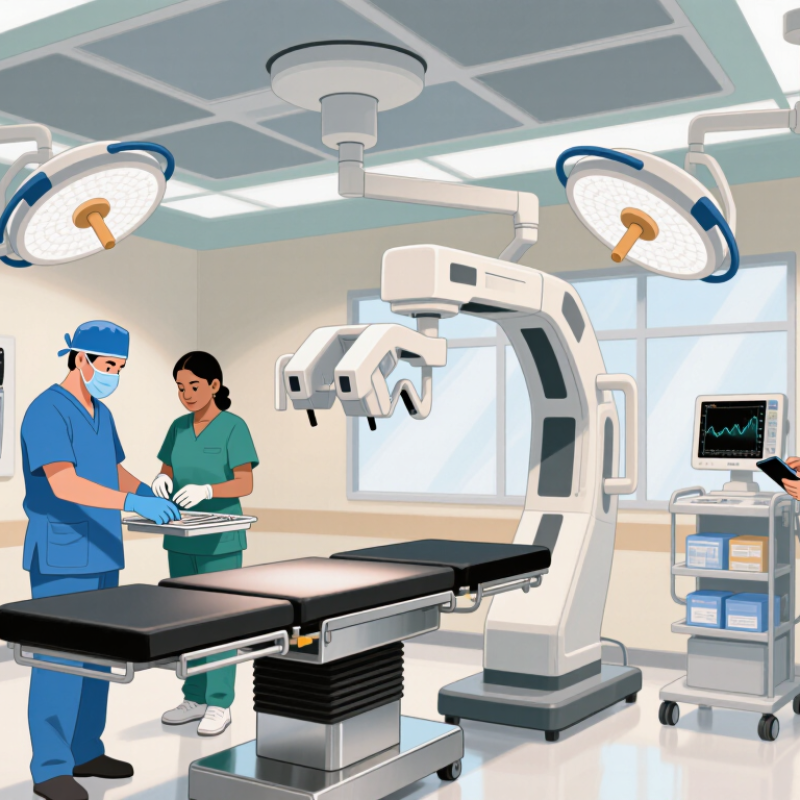
The best surgical equipment in 2026 depends on the healthcare setting, procedure volume, and local support. A large hospital may need integrated operating tables, ceiling-mounted surgical lights, anesthesia workstations, and advanced electrosurgical units. These systems improve workflow when several teams share the same operating room. However, complex equipment can increase training needs and service costs.

A regional hospital may benefit more from durable, modular equipment. A mobile operating table, LED surgical light, compact patient monitor, and reliable suction unit can support many procedures. These devices are easier to relocate and maintain. Rural facilities often need equipment that tolerates unstable power and limited technical support. Battery backup matters. Simple controls matter more than impressive software.

Ambulatory centers may prioritize compact anesthesia systems, efficient sterilization equipment, and procedure-specific imaging. An endoscopy tower can support high patient turnover, while a mobile C-arm suits facilities performing orthopedic or pain procedures. Buyers should check image quality, electrical compatibility, cleaning requirements, warranty terms, and spare-part availability. Independent clinical evaluation is valuable, but it may not reveal every daily maintenance problem.

No comparison is perfect. A technically advanced system can become impractical without trained staff. In my experience, procurement teams sometimes focus on purchase price and overlook installation time. That mistake can delay procedures. Hospitals should request demonstrations, review service records, and speak with users in similar settings before making a decision.

What Is the 2026 Best Surgery Equipment for Global Buyers? - Comparing Leading Equipment Options for Different Healthcare Settings

Equipment Option Primary Clinical Use Best-Fit Healthcare Setting Typical 2026 Configuration Main Advantages Key Limitations Facility Requirements Indicative Budget (USD) Procurement Priority
Electric Surgical Table Patient positioning for general, orthopedic, gynecologic and laparoscopic procedures. General hospitals, ambulatory surgery centers and district hospitals. Electric height adjustment, back and leg articulation, trendelenburg/reverse trendelenburg, radiolucent top and a patient load commonly around 250–450 kg. Improves positioning accuracy, supports multiple specialties and reduces manual handling. Requires preventive maintenance; accessories may be specialty-specific and purchased separately. Operating-room power, reliable braking, compatible accessories and adequate floor clearance. $8,000–$35,000 Essential
LED Surgical Light System Shadow-reduced illumination of the operative field. All operating rooms, including mobile surgical units. Single or dual ceiling-mounted heads, adjustable intensity, color-temperature control and illumination commonly up to approximately 160,000 lux per head. Low heat output, long LED service life, energy efficiency and improved visualization. Ceiling installation can be difficult in older buildings; sterile-handle design must be checked. Structural ceiling support, emergency power and professional installation. $4,000–$30,000 Essential
Anesthesia Workstation Delivery of anesthetic gases, ventilation and respiratory monitoring during surgery. Hospitals performing general anesthesia and higher-acuity surgery. Integrated ventilator, oxygen and air flowmeters, breathing circuits, vaporizer support, capnography and multiple alarm functions. Combines ventilation, gas delivery and monitoring in one controlled platform. Needs trained anesthesia staff, gas supply and regular safety checks. Medical oxygen, medical air, waste-gas scavenging, power backup and clinical gas testing. $18,000–$75,000 Essential
Multiparameter Patient Monitor Continuous monitoring of ECG, oxygen saturation, non-invasive blood pressure, temperature and respiration. Operating rooms, recovery areas, emergency departments and intensive-care units. 12–15 inch display, 3/5-lead ECG, SpO₂, NIBP, dual temperature and optional invasive pressure or capnography modules. Supports perioperative safety and can be configured for different patient acuity levels. Disposable sensors and accessories add recurring operating costs. Reliable power, alarm management, cleaning-compatible surfaces and optional network connectivity. $3,000–$20,000 Essential
Electrosurgical Unit Tissue cutting, coagulation and hemostasis during open and minimally invasive procedures. General surgery, gynecology, urology and outpatient surgery. Monopolar and bipolar modes, adjustable power, return-electrode monitoring and compatibility with smoke evacuation. Versatile, compact and useful across a broad range of surgical procedures. Incorrect settings or poor electrode contact can cause burns or interference with implanted devices. Grounded electrical system, compatible accessories, staff training and smoke evacuation planning. $2,500–$18,000 Essential
Laparoscopic Imaging Tower Visualization and image processing for minimally invasive abdominal and pelvic surgery. Tertiary hospitals and high-volume general, gynecologic or urologic surgery centers. Full-HD or 4K camera system, LED light source, insufflator, medical display and image-recording capability. Can reduce incision size and support minimally invasive clinical pathways. Higher capital cost, specialized instruments and a significant learning curve. Stable power, medical-grade video connections, CO₂ supply and instrument reprocessing capacity. $35,000–$180,000 High-volume priority
Portable Ultrasound System Point-of-care imaging, vascular access, regional anesthesia and focused surgical assessment. Rural hospitals, emergency surgery, mobile clinics and operating rooms with limited imaging access. Laptop or cart-based unit with linear, curvilinear and phased-array probes; optional needle-visualization and Doppler functions. Portable, versatile and suitable for facilities without a dedicated imaging suite. Image quality and workflow depend strongly on operator training and probe selection. Battery charging, probe disinfection, secure data storage and regular calibration. $8,000–$60,000 Flexible priority
Steam Sterilizer Sterilization of compatible reusable surgical instruments and loads. Hospitals, central sterile services departments and ambulatory surgery centers. Pre-vacuum cycle, programmable temperatures around 121–134°C, load monitoring, data recording and chamber sizes selected by workload. Essential infection-control infrastructure with repeatable validated cycles. Not suitable for moisture-sensitive equipment; requires water quality, maintenance and process monitoring. Treated water, drainage, ventilation, loading space and compliance with local sterilization procedures. $12,000–$100,000 Essential
Surgical Smoke Evacuation System Capture and filtration of smoke generated by electrosurgery or laser procedures. Operating rooms using electrosurgical devices frequently or performing laparoscopic procedures. High-flow suction, ULPA or equivalent high-efficiency filtration, activated carbon stage and disposable capture tubing. Improves air quality and reduces staff exposure to surgical plume. Filters and tubing require scheduled replacement; noise and suction management should be considered. Electrical outlet, suitable filter-disposal process and compatibility with electrosurgical accessories. $1,500–$12,000 Recommended
Mobile C-Arm Fluoroscopy System Real-time X-ray imaging for orthopedic, trauma, pain-management and selected vascular procedures. Trauma centers, orthopedic hospitals and facilities performing image-guided surgery. Digital flat-panel detector or image intensifier, pulsed fluoroscopy, adjustable dose controls and image storage. Provides intraoperative imaging without moving the patient to a radiology department. Radiation exposure, operator training and regulatory requirements increase ownership complexity. Radiation shielding, controlled area, dosimetry, trained operators and preventive servicing. $70,000–$250,000 Procedure-dependent
Operating-Room Integration System Centralized control of video routing, displays, documentation and selected room functions. Large hospitals, teaching hospitals and high-volume minimally invasive surgery centers. Central touchscreen, medical-grade displays, video routing, recording, PACS connectivity and room-control interfaces. Improves workflow visibility, teaching capability and digital documentation. High installation cost and interoperability issues may arise when equipment is sourced separately. Structured cabling, network security, compatible video standards and specialist commissioning. $80,000–$350,000+ Expansion priority
Buyer note: Budget ranges are indicative 2026 international purchasing estimates for equipment only and may exclude shipping, customs duties, installation, training, service contracts, consumables and facility modifications. Final selection should consider applicable local regulations, electrical standards, sterilization protocols, staff competency, spare-parts availability and total cost of ownership.

Building a Practical Global Procurement and Implementation Plan

What Is the 2026 Best Surgery Equipment for Global Buyers?

Building a Practical Global Procurement and Implementation Plan

The best surgical equipment in 2026 is not always the newest or most expensive. It must fit the procedure, facility, staffing level, and local support network. Buyers should define clinical needs before comparing technical specifications. A compact operating table may suit a regional hospital better than a complex integrated system. Check load capacity, adjustment range, cleaning surfaces, power requirements, and backup options. These details affect daily safety.

A reliable procurement plan includes more than the purchase order. Request documented quality certifications, user manuals, installation requirements, and preventive maintenance schedules. Confirm that replacement parts and trained technicians are available in the destination country. Ask for realistic delivery times, warranty coverage, and remote support procedures. A missing adapter can delay surgery. That is not a small issue. Procurement teams should also review electrical standards, import rules, data protection duties, and clinical approval requirements with qualified local professionals.

Tips: Create a scoring sheet with safety, usability, lifecycle cost, service access, and training. Test the equipment with surgeons, nurses, biomedical engineers, and cleaning staff. Record their feedback. Do not rely on a polished demonstration alone. Pilot the system in one operating room before wider deployment. In practice, implementation often takes longer than expected, especially when room layouts or staff routines change. That weakness should be planned for, not hidden. A clear escalation contact and written acceptance checklist can prevent confusion during installation.

Back to top